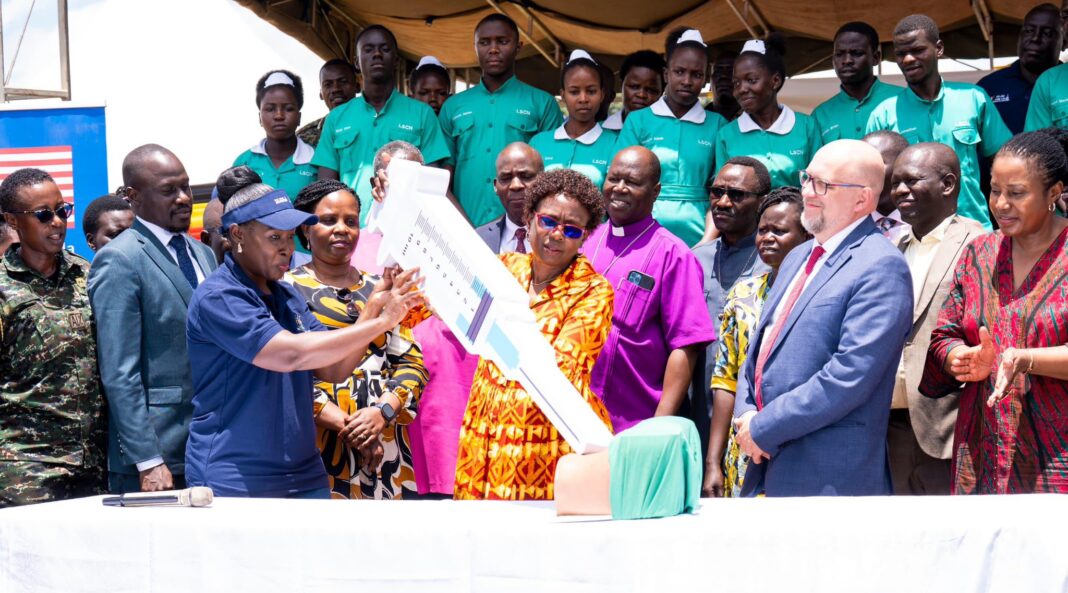
At Lira Regional Referral Hospital, Uganda on Monday marked a significant milestone in the fight against HIV with the official launch of lenacapavir, a long-acting injectable prevention drug administered just twice a year.
The rollout, led by the Ministry of Health Uganda in partnership with the U.S. Embassy Uganda, the Global Fund, and U.S. pharmaceutical firm Gilead Sciences, introduces what officials describe as a near game-changing tool in HIV prevention.
Lenacapavir is a long-acting pre-exposure prophylaxis (PrEP) injection that offers protection for up to six months, with studies showing it can avert nearly 100 percent of new HIV infections when properly administered.
Speaking at the launch, Health Minister Jane Ruth Aceng Ocero said Uganda will adopt a phased rollout strategy, initially targeting populations most at risk in high-burden districts.
“We have already completed training in 103 health facilities that will begin phase one implementation this April,” she said, adding that the number of facilities offering the injectable is expected to rise to 300 by December 2026.
The introduction of lenacapavir comes at a critical time. Uganda continues to record approximately 37,000 new HIV infections annually, including more than 11,000 among adolescent girls and young women aged 15 to 24, and about 5,000 among children under 14. Health officials note that a significant proportion of pediatric infections are linked to mothers who acquire HIV during pregnancy or breastfeeding.
Delivering remarks on behalf of the United States, Deputy Chief of Mission Mikael Cleverley described the drug as a breakthrough born out of American innovation and global partnership.
“Today, we launch lenacapavir in Uganda—a groundbreaking HIV prevention tool that will save lives and bring us closer to ending HIV as a public health threat,” he said.
The United States, through its global health partnerships and collaboration with the Global Fund, aims to reach three million people in high-burden countries with lenacapavir by 2028. In Uganda alone, approximately 46,000 people are expected to access the drug in 2026, with additional supplies projected in subsequent years.
Officials highlighted that Uganda’s selection as an early rollout country reflects its strong HIV response systems and track record. Over the past decade, the country has significantly expanded access to PrEP—from just seven health facilities in 2017 to nearly 700 today—reaching more than 900,000 at-risk individuals.
At the same time, interventions to prevent mother-to-child transmission have reduced infection rates by more than 70 percent since 2015, a success attributed to sustained investment, including support from the United States through PEPFAR.
Health experts say lenacapavir could accelerate these gains by offering a discreet, long-acting alternative for individuals who struggle with daily or routine pill-based prevention methods. The injection is particularly expected to benefit vulnerable groups, including adolescent girls, young women, and pregnant or breastfeeding mothers.
Beyond the science, officials emphasised the importance of community trust, health worker engagement, and strong supply chain systems to ensure successful implementation.
District leaders and health workers have been tasked with ensuring proper storage and distribution of the drug, while communities are encouraged to embrace the new prevention option and share information widely.
The launch underscores a broader vision: expanding access to effective HIV prevention tools, eliminating mother-to-child transmission, and ultimately ending HIV as a public health threat.
As Uganda steps into this new phase, the partnership between national leadership and international allies signals renewed momentum—and cautious optimism—in a decades-long fight.